J杭州炬卡电器有限公司Solar Cold Chain Refrigeration Get a Quote
Home / News
Notes for Buyers

Technical notes and company news

Practical guidance for importers and project buyers planning solar refrigeration — written for the questions that come up most often in enquiries.

Choosing a solar power architecture
Technical Note · Solar Power

Choosing between the four solar power architectures

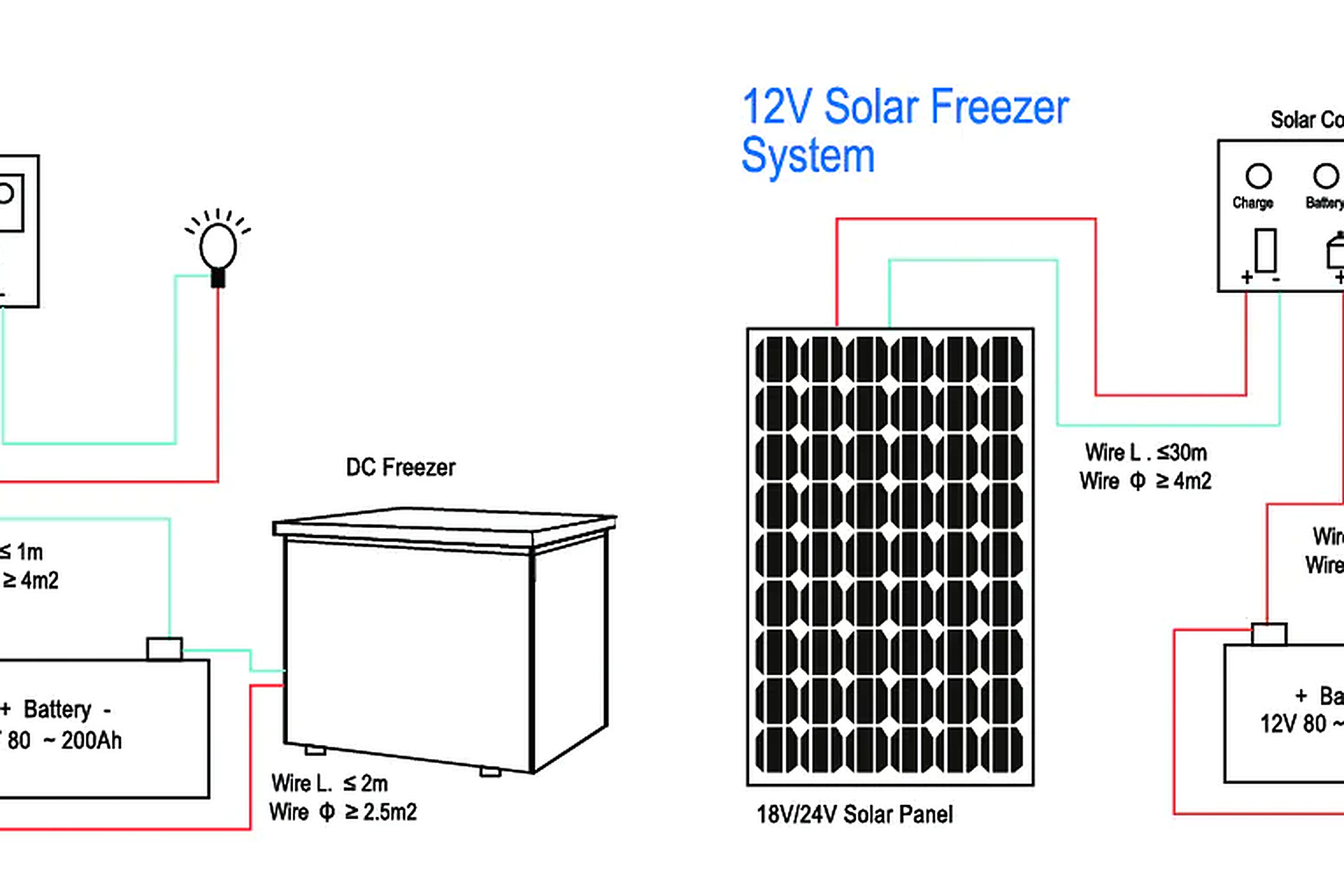
The first question on any solar refrigeration enquiry is not "which model" but "what power do you have". If there is strong sun and no mains at all, and the cabinet only needs to run during trading hours, the day-only photovoltaic configuration is the cheapest and simplest — cabinet plus panel, no battery. If the cabinet must run overnight and mains power exists but is expensive, an external AC/DC adaptor lets solar cover the day and the grid cover the night at far lower cost than a battery bank.

Insulation thickness selection
Technical Note · Insulation

65 mm or 110 mm foam: how to decide

Insulation thickness is the single biggest determinant of how much energy a cabinet consumes and how long it holds temperature through the night. The 65 mm build suits shorter day cycles and milder ambient conditions. The 110 mm build is the right choice where the cabinet must hold temperature overnight on a battery, or where daytime ambient temperature is consistently high — the extra foam buys holding time, which directly reduces the battery capacity you need to buy.

Container loading planning
Buyer Guide · Logistics

Use the 40HQ quantity to compare landed cost, not the unit price

Two cabinets of the same volume can load very differently into a 40-foot high-cube container. Because freight is charged per container rather than per unit, the loading quantity in our specification tables is often the figure that decides which model is genuinely cheaper for your market. Every model page on this site lists the 40HQ load alongside the packing dimension so the comparison can be made before the order is placed.

Refrigeration circuit cleanliness
Technical Note · Quality

Why we purge both circuits with nitrogen before joining

Moisture and oxidation inside a refrigeration circuit are the root cause of most early failures — capillary blockage, acid formation and compressor damage. Purging both the condenser section and the evaporator section with nitrogen before the joints are made removes that risk at the point where it is cheapest to remove. It costs us time on every unit, and it is one of the reasons we insist on a 20 Pa vacuum standard before charging.

Mobile solar retail
Market News · Mobile Retail

Mobile solar refrigeration: a business, not just a cabinet

Our solar ice-cream tricycles, push carts and beer retail carts are built for vendors who have no premises and no power supply. The refrigeration, the cabinet and the mobility are designed together, so the unit becomes a complete small business rather than a freezer that has to be moved by someone else. Enquiries for these models usually come with questions about daily ice-cream capacity and battery runtime — both are answered by the power architecture chosen for the site.

CKD and SKD kits
Company News · CKD / SKD

Supporting partners who want to assemble locally

More of our customers now start with a container of finished cabinets and later move to CKD or SKD assembly. We support that transition: kits are packed in assembly order with a parts list per cabinet, and we help partners set up the assembly line and train production workers. Local assembly reduces landed cost, shortens the supply chain and creates skilled employment in the partner market — which is the outcome we are aiming for.

Have a technical question about your site?

Send us the location, the sunshine situation and the power supply, and we will recommend the right architecture and model.

Ask Our Engineers